
Human Resources
Wage And Hour Compliance In 2026: It's More Than Just Calculating Overtime
CWS2026342
100 Minutes
May 15,2026 - Jul 31,2026
Overview
Federal and state wage and hour compliance remains one of the most critical responsibilities in the payroll department. This webinar focuses on the wage and hour requirements that payroll professionals must follow, including overtime calculation, travel time, minimum wage, posting requirements, meal and rest periods, pay frequency, approved methods of payment, and the rules for paying terminated employees. Attendees will gain practical insight into how these requirements affect payroll preparation and day-to-day compliance obligations.
The Department of Labor takes wage and hour violations very seriously, and the risks to employers continue to grow. In FY2025 alone, agency-initiated investigations found violations that resulted in fines and penalties exceeding $259 million. Civil lawsuits for wage and hour violations also remain a significant threat, with penalties severe enough to shake the financial foundations of even some of the world’s most successful companies. Join Vicki M. Lambert, CPP, “The Payroll Advisor,” for this information-packed webinar and get the knowledge you need to help protect your company from costly wage and hour mistakes and financial jeopardy.
Areas Covered in This Webinar:
- Federal and state minimum wage requirements, including tip credits and youth wage
- Defining the legal workweek and workday, including hours worked and overtime impact
- Proper calculation of regular rate of pay and overtime under the FLSA
- Travel time pay requirements and compensable working time
- Meal and rest periods, including compliance and deductions
- Pay frequency, methods of payment, and pay statement requirements
- Posting requirements and handling differences between federal and state laws
- Paying terminated employees and handling accrued vacation payouts
Your Benefits For Attending:
- Gain knowledge of federal and applicable state wage and hour law as it pertains to payroll preparation.
- Understand the proper calculation of gross pay and overtime pay.
- Learn key FLSA terminology related to calculating overtime and hours worked.
- Develop a basic understanding of what is considered hours worked, including travel pay and meeting time.
- Learn when an employee must be given a lunch period and when an employer may dock for meal periods.
- Understand requirements for paying employees, including permitted pay frequencies and methods allowed under state laws.
- Gain a basic understanding of what must be included on a pay stub.
This webinar provides valuable guidance for professionals responsible for payroll accuracy, wage and hour compliance, and reducing organizational risk. Attending will help you strengthen your knowledge, improve payroll practices, and better protect your company from costly violations, fines, and penalties.
Who Can Benefit:
- Payroll Executives, Managers, Administrators, Professionals, Practitioners, and Entry-Level Personnel
- Human Resources Executives, Managers, and Administrators
- Accounting Personnel
- Business Owners, Executive Officers, Operations Managers, and Departmental Managers
- Lawmakers
- Attorneys and Legal Professionals
- Any individual or entity that must deal with the complexities and requirements of wage and hour compliance
Table of Contents
- Introduction
- Our Focus For Today
- “White Collar” Exemptions
- Standard Salary Level
- Definition Of Overtime Pay
- But Maybe The States Require Daily Overtime
- But Maybe The States Require… Special Overtime
- Useful Definitions
- Semimonthy Payrolls & Overtime
- Public Sector Work Week
- Hospital Employees
- And….
- Hours Worked…
- Keeping Track Of Hours Worked
- Two Exceptions
- Rounding Practices
- Rounding Example
- Rounding Example Continued
- Rounding Example - Fact Sheet #53
- Rounding Example - Fact Sheet #21
- Example - Fact Sheet #21 Cont’d
- De Minimis Or Insignificant Timekeeping
- Definition Of Hours Worked
- The U.S. Supreme Court Has Ruled That Hours Worked Include
- Therefore…
- Which Means
- Therefore…
- Travel And Other Types Of Pay
- Travel And Other Types Of Pay Cont’d
- Regular Rate Of Pay
- Regular Rate Of Pay Cont’d
- 1. Does Not Include Gifts
- 2. Does Not Include Nonworking Hours
- 3. Does Not Include Expenses
- 4. Does Not Include Discretionary Bonuses
- 4. Example Of Discretionary Bonus
- 4. Example Of Non-Discretionary Bonus
- 4. Bonuses Normally Include
- 5. Does Not Include Profit Sharing
- 6. Does Not Include Health Or Life Insurance
- 7. Does Not Include Premium Pay
- 8. Does Not Include Premium Pay
- Payments For Suggestions?
- Payments For Suggestions? Cont’d
- Regular Rate Of Pay
- Regular Rate Of Pay Cont’d
- Methods For Calculating Overtime
- Doing The Math…Following The Steps
- Now An Example With Numbers
- The Proper Or FLSA Method
- The Proper Or FLSA Method Cont’d
- Commonly Used Or Alternative Method
- Example With Bonus
- Notice The Difference
- Let’s Do Another Example
- The Right Way (Using DOL OT Calculator)
- But What If More Than One Week Is Involved?
- Multiple Rates Of Pay
- Commission Payments
- Deductions & Noncash Payments
- Minimum Wage
- Room And Board
- Tip Credit
- State And Local Issues
- Minimum Wage By State
- Current State Minimum Wage
- Credits Against Minimum Wage
- Tip Credit Against Minimum Wage
- Tip Credit Against Minimum Wage Map
- Youth Minimum Wage (Training Wage)
- Creditor Garnishment Table
- State Update
- Living Wages
- Sick Leave - State/City Chart
- Paid Family Leave
- Meal And Rest Periods
- Meal Periods
- Meal Periods By State Map
- Rest Periods
- Posting Requirements
- Statements (Paystubs)
- States With No Requirement
- Employee Request
- Mandatory Statement
- Ohio
- Statement Of Deductions
- Direct Deposit Pay Cards
- Electronic Statements
- Payday Notices
- Payday Notices Map
- Pay Rate Notices
- Frequency Of Wage Payments
- Permitted Payroll Frequencies
- Max Period Permitted For Nonexempt Employees For Private Sector Employers
- Method Of Payment
- Cash and Checks
- Direct Deposit
- Voluntary Only
- Pay Cards
- Paycards By State Private Sector Employers
- Paying Terminated Employees
- Terminated Employees By State
- Terminated Employees By State Cont’d
- Vacation Pay And Termination
- Vacation Payout Requirements States Chart
- Vacation Payout Requirements States Chart Cont’d
- Deducting From Wages For Overpayments
- Overpayments: FLSA Requirements
- State Requirements
- California
- California Cont’d
- State Breakdown for Handling Overpayments Map
- Deducting For Advanced Vacation
- Vacation - CA
- New York
- Vacation - ND
- Additional Resources
- Are There Any Questions?
- Presentation Closure
Index
- 8/80 Rule
- De Minimis
- Department of Labor (DOL)
- Discretionary Bonus
- Exempt
- Expense
- Fair Labor Standards Act (FLSA)
- Fringe Benefits
- Living Wage
- Minimum Wage
- Nondiscretionary Bonus
- Non-exempt
- Overtime
- Prevailing Wage
- Regular Rate of Pay
- Temporary Disability Insurance (TDI)
- Travel Pay
- Wage
Key Terms
8/80 Rule: The “8 and 80” exception allows employers to pay one and one-half times the employee's regular rate for all hours worked in excess of 8 in a workday and 80 in a fourteen-day period.
De Minimis: Too trivial or minor to merit consideration.
Department of Labor (DOL): The United States Department of Labor is a cabinet-level department of the U.S. federal government responsible for occupational safety, wage and hour standards, unemployment insurance benefits, reemployment services, and some economic statistics; many U.S. states also have such departments.
Discretionary Bonus: The employer has the sole discretion, until at or near the end of the period that corresponds to the bonus, to determine the amount of the bonus; and the bonus payment is not made according to any prior contract, agreement, or promise causing an employee to expect such payments regularly.
Exempt : Exempt employee is a term that refers to a category of employees set out in the Fair Labor Standards Act. They do not receive overtime pay, nor do they qualify for the minimum wage
Expense: Offset (an item of expenditure) as an expense against taxable income.
Fair Labor Standards Act (FLSA): The Fair Labor Standards Act of 1938 29 U.S.C. § 203 is a United States labor law that creates the right to a minimum wage, and "time-and-a-half" overtime pay when people work over forty hours a week. It also prohibits most employment of minors in "oppressive child labor".
Fringe Benefits: An extra benefit supplementing an employee's salary, for example, a company car, subsidized meals, health insurance, etc.
Living Wage: A living wage is defined as the minimum income necessary for a worker to meet their basic needs. This is not the same as a subsistence wage, which refers to a biological minimum, or a solidarity wage, which refers to a minimum wage tracking labor productivity.
Minimum Wage: The lowest wage paid or permitted to be paid specifically fixed by a legal authority or by contract as the least that may be paid either to employed persons generally or to a particular category of employed persons.
Non-Discretionary Bonuses: A non-discretionary bonus is a bonus that the employee is expected to be paid and it is usually given at the same time, either monthly, quarterly or annually. Because these bonuses are agreed upon ahead of time, they must be included in the regular rate of pay and the calculation of overtime.
Non-Exempt: Non-exempt employees are workers who are entitled to earn the federal minimum wage for every hour they work. Such workers likewise qualify for overtime pay, which is calculated as one-and-a-half times their hourly rate, for every hour they work, above and beyond a standard 40-hour workweek.
Nondiscretionary Bonus: A nondiscretionary bonus is a bonus that fails to meet the statutory requirements of a discretionary bonus. Nondiscretionary bonuses are included in the regular rate of pay, unless they qualify as excludable under another statutory provision.
Overtime: Overtime is time and a half of what an employee earns for every hour worked over 40 in a workweek. The FLSA salary threshold is the minimum salary employers must pay employees for them to be exempt from overtime wages.
Prevailing Wage: In United States government contracting, a prevailing wage is defined as the hourly wage, usual benefits and overtime, paid to the majority of workers, laborers, and mechanics within a particular area. This is usually the union wage.
Regular Rate of Pay: An employee’s regular rate is the hourly rate an employee is paid for all non-overtime hours worked in a workweek. When calculating an employee’s regular rate, all compensation received by the employee in a workweek must be included, including wages, bonuses, commissions, and any other forms of compensation.
Temporary Disability Insurance (TDI): Temporary Disability Insurance provides cash benefits to workers who suffer an illness, injury, or other disability that prevents them from working, and wasn't caused by their job.
Travel Pay: Travel Pay is payment for expenses employees spend traveling for work-related activities. This could include airfare, trainfare, gas and milegae, and meals.
Wage: A fixed regular payment, typically paid on a daily or weekly basis, made by an employer to an employee, especially to a manual or unskilled worker.
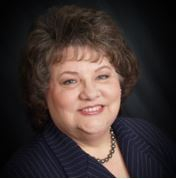
Vicki M. Lambert
Vicki M. Lambert, CPP, is President and Academic Director of The Payroll Advisor™, a firm specializing in payroll education and training. The company (www.thepayrolladvisor.com) offers a payroll news service which keeps payroll professionals up-to-date on the latest rules and regulations.
With nearly 40 years of hands-on experience in all facets of payroll functions as well as over three decades as a trainer and author, Ms. Lambert has become the most sought-after and respected voice in the practice and management of payroll issues. She has conducted open market training seminars on payroll issues across the United States that have been attended by executives and professionals from some of the most prestigious firms in business today.
A pioneer in electronic and online education, Ms. Lambert produces and presents payroll related audio seminars, webinars and webcasts for clients, APA chapters and business groups throughout the country. Ms. Lambert is an adjunct faculty member at Brandman University in Southern California and is the creator of and instructor for their Practical Payroll Online program, which is approved for recertification hours by the APA. She is also the instructor for the American Payroll Association’s “PayTrain” online program also offered by Brandman University.